



How to choose the right blade shape for your needs
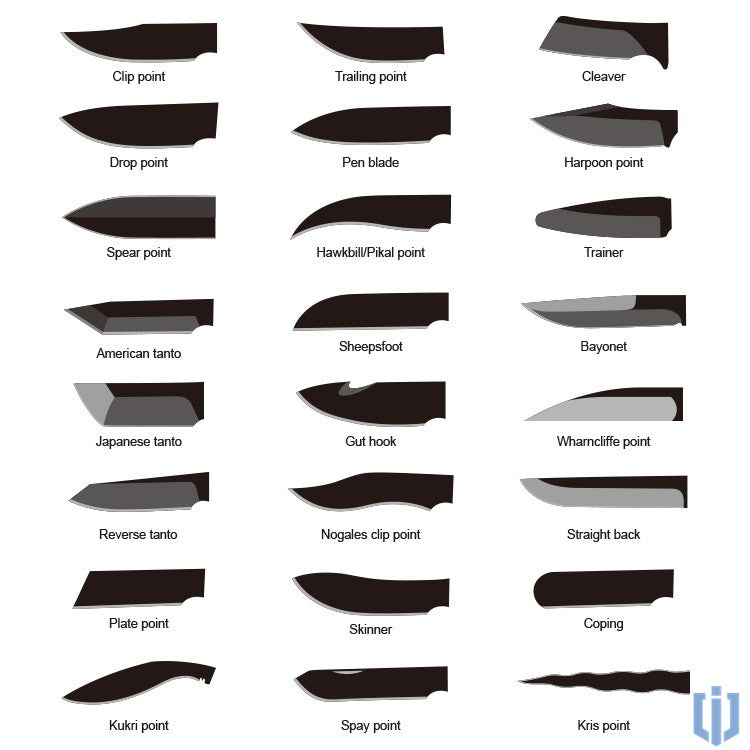
Choosing the right blade shape can be crucial for making the most of a knife's functionality and efficiency. Whether you're an outdoor enthusiast, a home cook, or a collector, the blade shape determines how well the knife is suited for a particular task. In this article, you'll learn about the different blade shapes available and how to choose the right one for your needs.
1. Drop-Point Blade
The drop-point blade is one of the most versatile blade shapes. It has a slightly downward sloping tip and a large, robust cutting edge. This shape is excellent for outdoor and hunting knives, as it is suitable for both fine work and powerful cuts.
Areas of Application:
-
Hunting
-
Camping
-
All-round use
2. Clip-Point Blade
The clip-point blade is characterized by an upward-curved tip formed by a "clip." This sharp tip offers precise control and is ideal for fine work or precise cutting.
Areas of Application:
-
Carving
-
Fishing
-
Precision cuts
3. Tanto Blade
The Tanto blade has a straight cutting edge and a very distinctive tip that is particularly robust. Originally inspired by Japanese swords, this blade shape is ideal for tough materials and piercing tasks.
Areas of Application:
-
Self-defense
-
Tactical applications
-
Cutting hard materials
4. Sheepsfoot Blade
The sheepsfoot blade has a straight cutting edge and a rounded tip. It offers maximum control and minimizes the risk of injuring oneself or the material.
Areas of Application:
-
Rescue operations
-
Sailing
-
Cutting ropes and belts
5. Wharncliffe Blade
This blade shape is similar to the sheepsfoot blade but has a slightly curved spine. It offers high control and is suitable for precise cutting.
Areas of Application:
-
Crafts
-
Woodwork
-
Fine work
6. Spear-Point Blade
The spear-point blade has a symmetrical shape with the tip centered. It offers an excellent balance between cutting and stabbing capabilities.
Areas of Application:
-
Throwing knives
-
Precision cuts
-
Tactical applications
7. Hawkbill Blade
The Hawkbill blade has a sickle-like shape that is particularly effective for pulling through materials like carpet or rope.
Areas of Application:
-
Gardening
-
Cutting ropes
-
Crafts
What should you consider when choosing?
-
Area of application: Consider what you want to use the knife for. Hunting knives require a different blade shape than tactical or rescue knives.
-
Material and workmanship: The blade shape alone is not enough – the material and workmanship also play a decisive role in the knife's performance.
-
Size and weight: A large blade may seem powerful, but it may not be the best choice for fine work. Choose a blade shape that suits your specific requirements.
-
Personal preferences: Some blade shapes feel better in the hand or are easier to handle. Try different shapes to find the best ergonomics for you.
Conclusion
Choosing the right blade shape is not a matter of chance, but of needs analysis. Each blade shape has its strengths and weaknesses, which are tailored to specific areas of application. By clearly defining your requirements and selecting the appropriate shape, you can ensure that your knife is a reliable companion in any situation.

Leave a comment